

«As an athlete (runner, triathlete), sports scientist and SWICA-recognised instructor, I had countless questions during my first pregnancy: What am I still permitted to do? How can I resume my sports routine? Since then, I have been concentrating on pre- and postnatal training and completed various further education courses (focus: Pelvic floor and separation of the abdominal muscles). Together with Anna Tomaschett, I founded the rund8fit.ch start-up and have been helping many pregnant women and mothers online to stay in shape since April 2020.»
- Prevent additional weight gain
- Avert gestational diabetes
- Improve mood and wellbeing in general
- Aid recovery after the birth
- Provide a positive effect on the brain development of the unborn (according to a study by Ellemberg et al.).
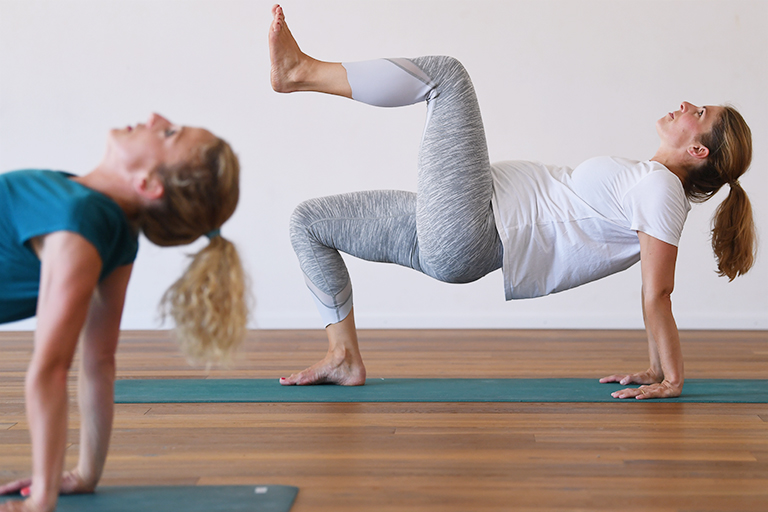
Welche Sportarten sind in der Schwangerschaft empfehlenswert?
A good recommendation is: "Don't try out anything new during pregnancy." The expectant mother's prior sports habits also play a role – except, of course, in the case of pregnancy yoga or Pilates. Pregnant women can attend such courses without hesitation, even if they have not done any sports, yoga or Pilates before.
In general, it is possible to continue all sports to which the body has become used to before the birth. At the same time, certain aspects such as intensity, abdominal muscles, and strain on the pelvic floor should be considered.
Pregnant women should generally avoid doing sports that involve:
- Strong impact
- Contact with opponents
- A high risk of falling
- Certain altitudes and very high outside temperature
- Heavy weights
Again, previous experience and individual discretion are important when doing sports with weights, running or cycling, for example. An experienced runner can continue her regimen for the time being, but she should consult a medical specialist and, above all, be well informed about exercising. This means constantly adapting the duration and intensity, doing additional strength and stability training, and knowing what to look out for concerning the pelvic floor. The body of a woman who exercised regularly with weights before pregnancy has become adapted to such weights and can handle a different amount of strain during pregnancy. Here, too, it's important to be well informed: Always put quality before quantity. Pregnancy is definitely no time for setting new records or best times
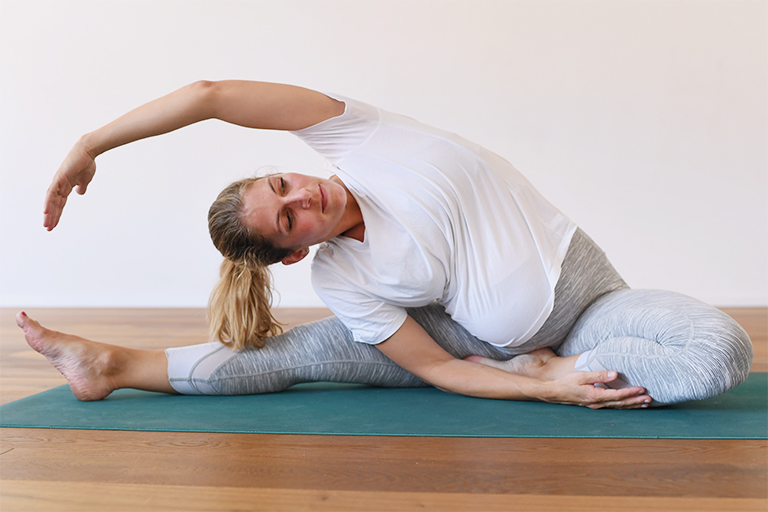
Wie oft und mit welcher Intensität darf eine Schwangere Sport treiben?
It's perfectly fine to exercise between 30 and 60 minutes a day during pregnancy. However, it's important to let the body recover after and between workouts.
Training in general should be within the aerobic zone, where you use oxygen to burn calories. If you know your heart rate values, you should not exercise above 80% of your individual maximum pulse. Those who do not know their individual values should use the range between 125 and 155 beats per minute as a guideline (source: German Sport University Cologne). For cycling, the heart rate zone is usually 10 beats lower; for swimming, it is 20 beats lower. Besides the pulse you see on your watch, paying attention to how your body feels is especially important. Here, you can use the Borg scale to determine your stress level (tip: omit heavy / very heavy).
Stop immediately if you notice any discomfort, strong dizziness, bleeding or signs of early labour and consult a medical specialist.
Various physical changes during pregnancy
Especially during and after pregnancy, the body undergoes many changes in a relatively short time. Some of the following changes are also relevant in connection with sports:
Pelvic floor
Pregnancy puts a strain on the pelvic floor, which has to carry the weight of the baby. At the same time, the pelvic floor should also be able to relax and release tension for the birth. So what should pelvic floor training look like during pregnancy?
We recommend that you train the pelvic floor holistically during your pregnancy. This includes gentle strengthening, relaxing and moving, as well as forming good habits for the pelvic floor. Pelvic floor training during pregnancy brings many benefits:
- Positive influence on posture
- More strength for carrying the extra weight (baby plus the uterus and placenta)
- Lower chance of incontinence during and after pregnancy
- Pelvic floor awareness (tensing and relaxing) helps during the birth
- Pelvic floor awareness (tensing and relaxing) helps with the recovery from the birth
Abdominal muscles
During pregnancy, the abdominal muscles soften, stretch and give way to the side to make room for the growing baby. It is thus necessary to maintain a gap between the straight abdominal muscles during pregnancy.
We therefore recommend functional and adapted abdominal muscle training during this time. This means not doing any crunches and sit-ups right at the beginning of pregnancy in the first trimester. After all, it makes little sense to deliberately shorten the straight abdominal muscles, which have to stretch anyway. No exercise (e.g. doing planks, push-ups, etc.) should tighten the abdomen. However, this may vary individually depending on the shape of the abdomen and the type of movement in question. We recommend that you adapt the exercise at the latest when you notice the abdomen tightening.
Posture
Your posture will change because the baby's weight will make it harder for your back muscles to maintain an upright posture. Regular exercise therefore helps to strengthen the weaker muscles and relax the ones you use more.


